Watermarking and Fingerprinting
making C2PA Content Credentials durable
v2025.10.23
While C2PA metadata is great for proof, in practice it is often insufficient on its own, because metadata is fragile. The classic example raised is that C2PA metadata does not survive taking a screenshot. More generally, metadata on its own fails when:
The metadata is removed: Anyone can remove the metadata from the file. Furthermore, in many workflows, metadata is removed even if there is no intention to remove it, because the simple act of transferring files between applications results in lost metadata. For consumers, this includes exporting from iPhone or posting on Instagram. For enterprise, this includes uploading to a DAM or using an editing tool.
The content is changed: any time content is compressed or transcoded, even if the metadata survives, the digital signatures are invalidated. Traditional cryptographic hashes do not tolerate any change in the data, no matter how minor, so they can only authenticate pristine copies. In the near-term, when perfect C2PA coverage is not expected, this is a critical issue for practical use.
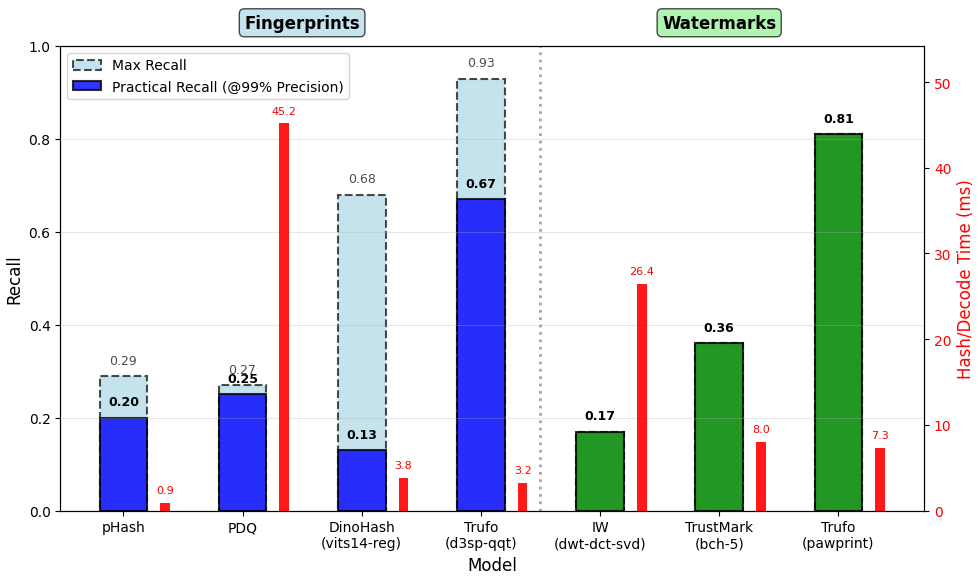
In order for provenance to be effective, it needs to be durable. That's where watermarks and fingerprints come in. Durability is also explicitly required by regulation: the EU AI Act Article 50(2) mandates that AI-content labels be "effective, interoperable, robust and reliable" — language that only durable bindings like watermarks can satisfy.